Building More Than Bricks as Learning Through Play Inspires Children
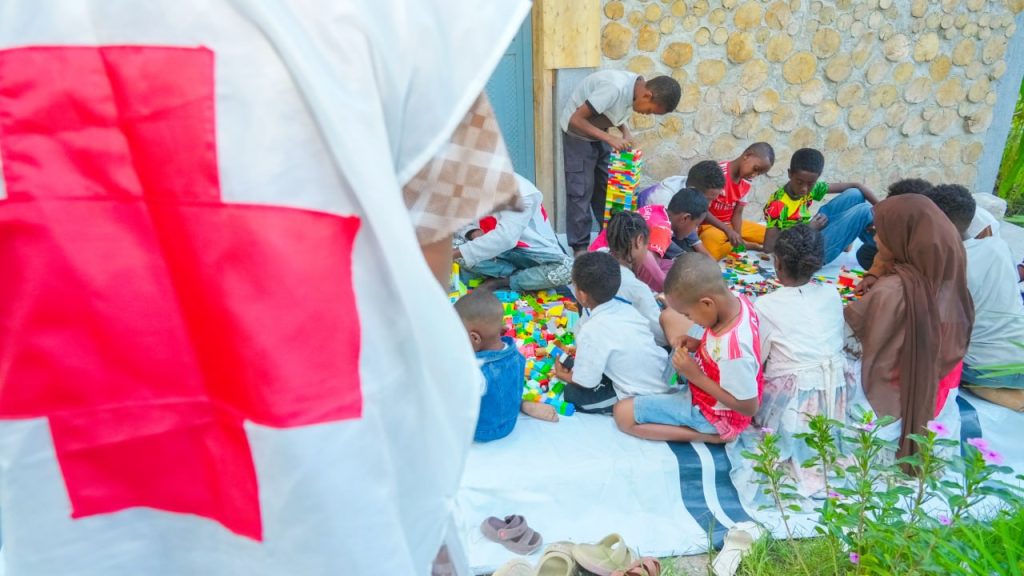
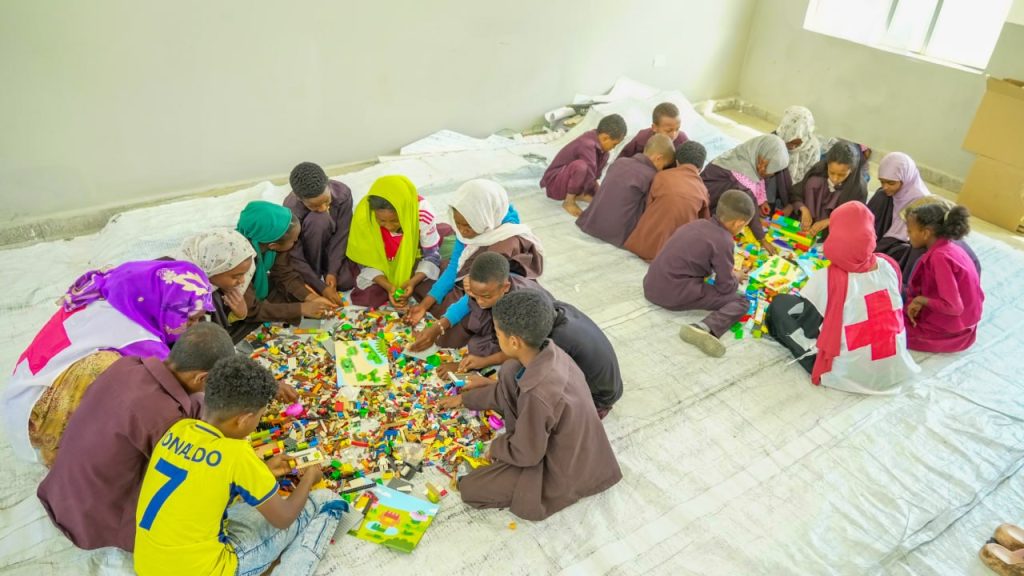
In a room at Haik Number One Primary School in Haik town, South Wollo Zone, a group of children are gathered around colourful LEGO bricks. Their hands move quickly as they select, connect and rearrange the small pieces, transforming individual bricks into houses, buildings, beds and other imaginative creations. Some exchange ideas, while others carefully study their designs before adding another piece. Laughter and conversation fill the room.
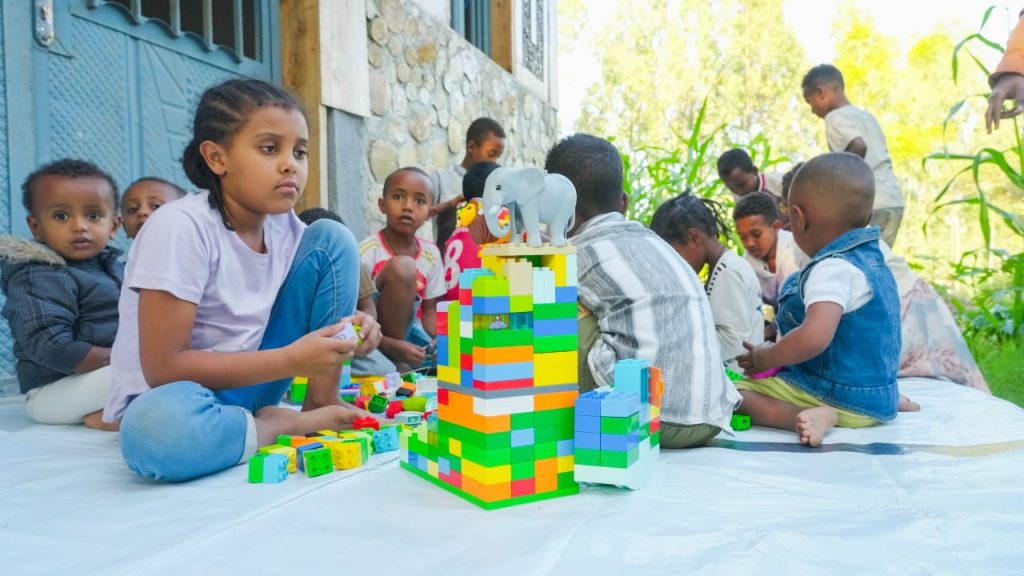
Among them is Yordanos Shimelis, a Grade Five student whose enthusiasm for the activity goes beyond simply putting building blocks together. For her, every construction is an opportunity to discover something new, exercise her imagination and learn from others.
“I enjoy playing with these bricks because they help refresh my mind. We have built houses, buildings, beds and other things. I have also made friends with children I did not know before,” Yordanos explains.
Her experience reflects the purpose of the Celebrating Learning Through Play (LEGO) Project, implemented by the Ethiopian Red Cross Society (ERCS) in partnership with the Danish Red Cross. The project uses structured, safe and inclusive play to support children’s learning, psychosocial well-being, creativity, social interaction and resilience.
For Yordanos, the LEGO sessions have opened up a different way of learning. By experimenting with different shapes and structures, she is beginning to understand how individual pieces can come together to create something bigger. She sees the activity not only as entertainment but also as an opportunity to develop practical skills and think about what she might achieve in the future.
“When I put the pieces together, I learn how to make different things. It helps develop my thinking. I want to become a doctor when I grow up, and I want to achieve better results in my education,” she says.
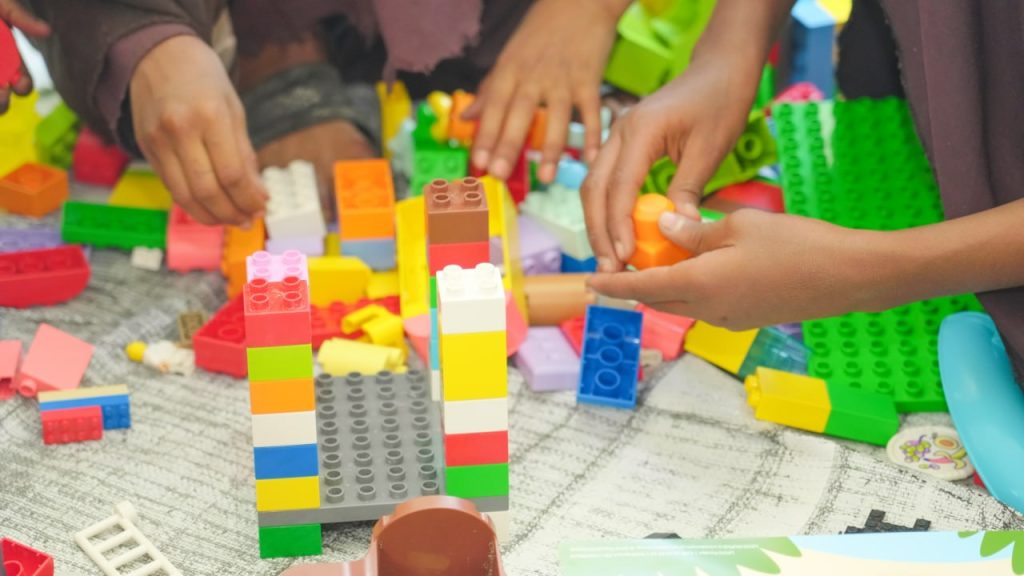
Her ambitions extend beyond her personal aspirations. Yordanos is also a member of the Ethiopian Red Cross Society school club, where she learns about humanitarian values, preventing conflict and promoting love and solidarity. Through her involvement, she has developed an interest in participating in different activities, including reciting poetry and encouraging other students to join the Red Cross.
“I am very happy to be a member of the Red Cross. I want to develop my talents and take part in different activities. I also encourage other students to become members and develop their abilities,” she adds.
The LEGO sessions provide a complementary learning environment where children can practice creativity, explore solutions and interact with their peers in ways that extend beyond conventional classroom activities.
While the colourful bricks capture children’s attention, the project’s impact is rooted in a broader commitment to their development and well-being.
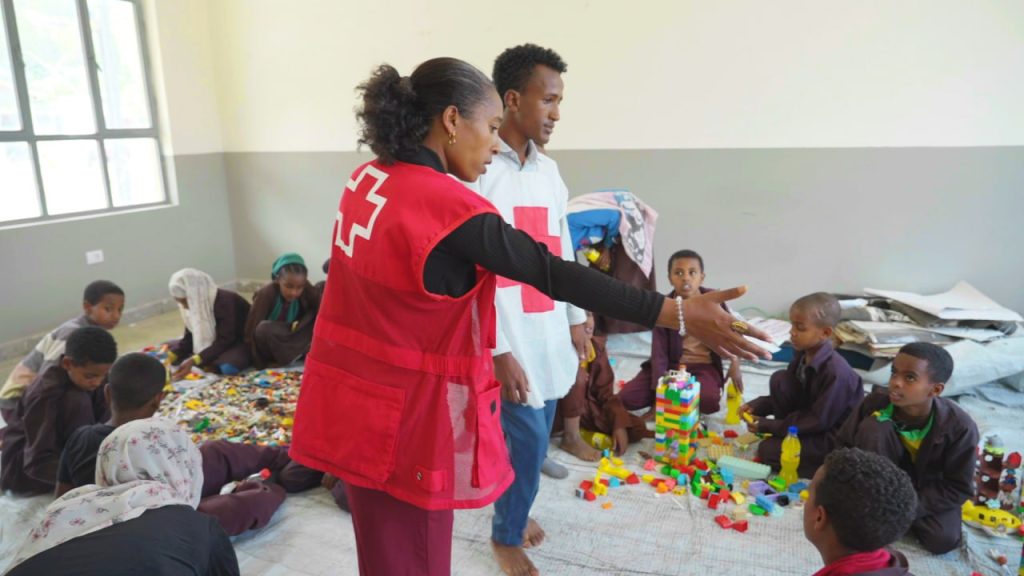
According to Birhane Negusu, Mental Health and Psychosocial Support (MHPSS) Officer at the ERCS South Wollo Zone Branch Office and the LEGO Project coordinator, the project was designed to respond to children’s developmental and psychosocial needs through meaningful play.
“The project primarily helps children learn while playing. As they assemble the materials, they develop their physical coordination, creativity, thinking abilities and social interaction. They also learn to work together and share ideas,” Birhane explains.
The project targets children aged 5-17 and is implemented in Tehuledere and Ambasel districts of South Wollo Zone.
In Tehuledere, activities are conducted in three schools, including Haik Number One and Number Two Primary Schools and Haik Secondary School, as well as community-based settings and existing social cohesion project structures. Similar activities are being introduced in selected schools and community spaces in Ambassel.
Through different age-appropriate activities, children are encouraged to identify colours, recognize animals, construct houses and create increasingly complex structures. Older children can explore more challenging designs that require planning, problem-solving, critical thinking and teamwork.
For younger participants, simple building activities provide opportunities to recognize shapes and colours and improve hand-eye coordination. For older children, more complex constructions encourage them to think independently, exchange ideas and find solutions collectively.
The project also addresses a gap in child-friendly recreational opportunities within the community. Birhane notes that children in Haik have limited access to dedicated recreational spaces designed around their developmental needs. The LEGO activities therefore provide an alternative environment where children can spend meaningful time engaging in constructive and interactive play.
Importantly, the project also creates opportunities for parents and caregivers. While children participate in facilitated activities, parents accompanying them can use the available community facilities and spend time in a supportive social environment.
Behind each LEGO session is the commitment of trained volunteers who help transform the materials into meaningful learning experiences.
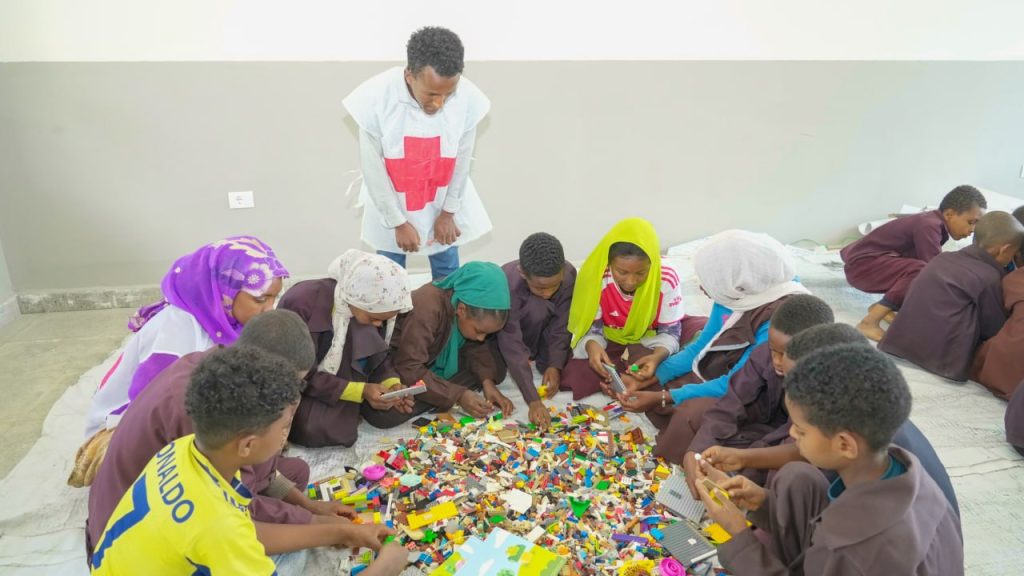
Fuad Assefa Mohammed, an ERCS volunteer in South Wollo, is among those facilitating the activities at Haik Number One Primary School. Having received project-related training, he works with children in small groups, guides their activities and encourages them to explore different ways of building and solving problems.
“We encourage children to use their hands, exercise their minds and create things using the materials. We guide them to identify colours, build different structures and use their imagination. Most importantly, we encourage them to work together and learn from one another,” Fuad says.
At Haik Number One Primary School, sessions take place twice a week. Children are organized into manageable groups, allowing volunteers to provide guidance and ensure that participants have opportunities to engage with the materials. Depending on the complexity of the activity and the children’s pace, each group session can last between 30 minutes and one hour.
For Fuad, one of the most valuable aspects of the approach is the opportunity it creates for children to interact with one another. Through group activities, children become acquainted, build friendships, exchange ideas and discover the value of cooperation.
“When children work together, they learn from each other. They understand that everyone can contribute something and that working as a team can help them accomplish tasks more effectively. They also enjoy the activities while learning different things,” he explains.
The volunteer’s role goes beyond distributing playing materials. Volunteers facilitate participation, encourage positive interaction and help children feel comfortable expressing their ideas. This makes the quality of facilitation essential to achieving the project’s objectives.
Recognizing that the project works directly with children, ERCS has placed particular emphasis on safeguarding and responsible implementation.
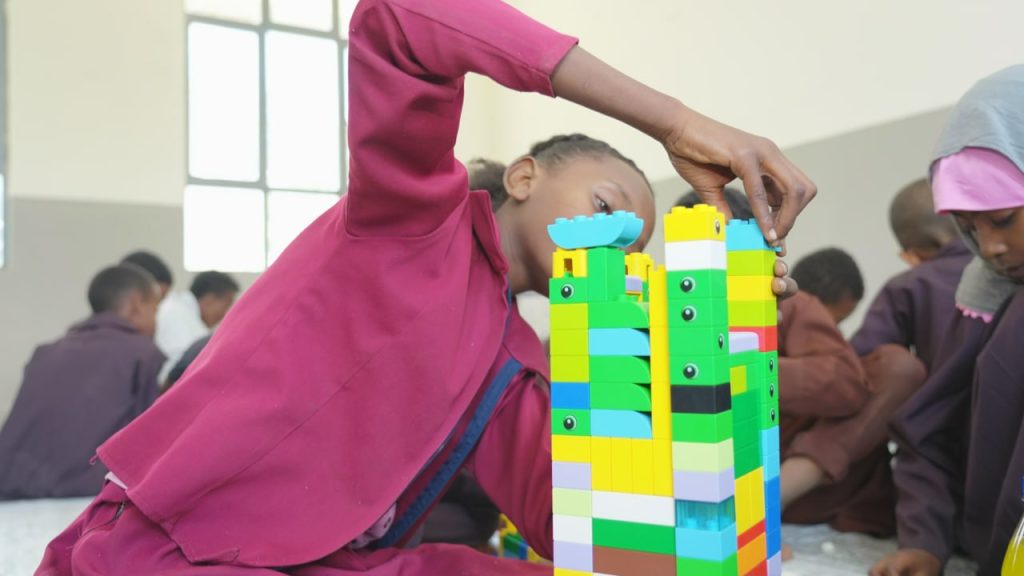
According to Birhane, teachers, club facilitators and volunteers have received training on the LEGO approach, its objectives and benefits, as well as child safeguarding. The training helps ensure that children are protected throughout the activities.
The project is supported by seven volunteers in the Tehuledere implementation area, alongside trained teachers and other facilitators. These local actors play an important role in ensuring regular engagement with children and creating an environment where participants of different ages and abilities can take part.
This investment in local capacity is particularly important for maintaining the quality, safety and continuity of activities beyond individual sessions.
Although the LEGO Project represents a relatively new approach within the ERCS South Wollo Branch, its introduction has generated encouraging interest among children and community members.
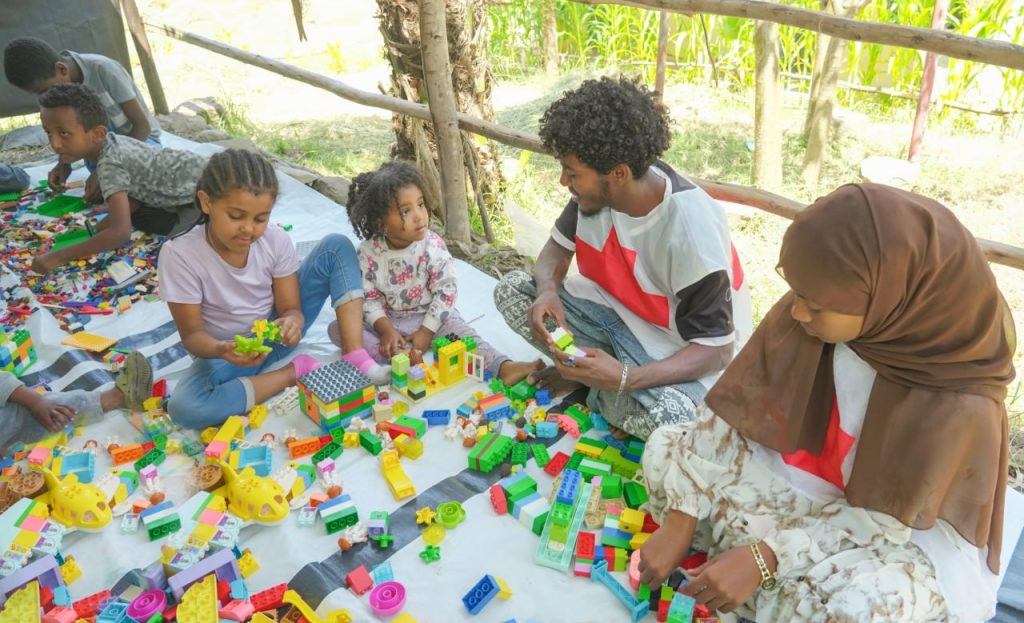
Birhane describes the initial reception as positive, noting that children are increasingly engaging in the sessions and that parents have also welcomed the opportunity. For the implementation team, this early acceptance provides a promising foundation for strengthening the approach.
The experience in Haik also demonstrates the value of integrating structured play into broader community-based social cohesion and psychosocial support initiatives. Rather than treating recreation as an optional activity, the project recognizes play as an important means through which children can develop essential life skills, strengthen relationships and express themselves.
The implementation experience offers several important lessons for future programming. First, play-based interventions should be adapted to children’s ages, interests and developmental abilities to ensure meaningful participation. Second, trained volunteers and teachers are essential to facilitating safe, inclusive and engaging activities. Third, collaboration with parents, schools and community structures can strengthen local acceptance and ownership. Finally, regular feedback from children and caregivers can help improve activities and guide future expansion.
For ERCS and its partners, the next step is to build on these early experiences, strengthen monitoring of children’s participation and developmental outcomes, and explore opportunities to integrate and sustain learning-through-play activities within existing school and community structures.
Back in the activity room, Yordanos continues arranging the colourful bricks, imagining what she can create next. Her aspirations of becoming a doctor remain firmly in her mind, while every new construction offers another opportunity to experiment, learn and connect with her peers.
For her and many other participating children, the value of the LEGO Project lies not simply in the structures they build, but in the opportunities they discover along the way.
Through its partnership with the Danish Red Cross, the Ethiopian Red Cross Society is demonstrating how a simple yet structured approach to play can create meaningful opportunities for children’s development and well-being.
Every brick may be small, but when children are given the space, support and encouragement to put them together, they can begin building something much bigger: confidence, creativity, friendships, resilience and possibilities for the future.