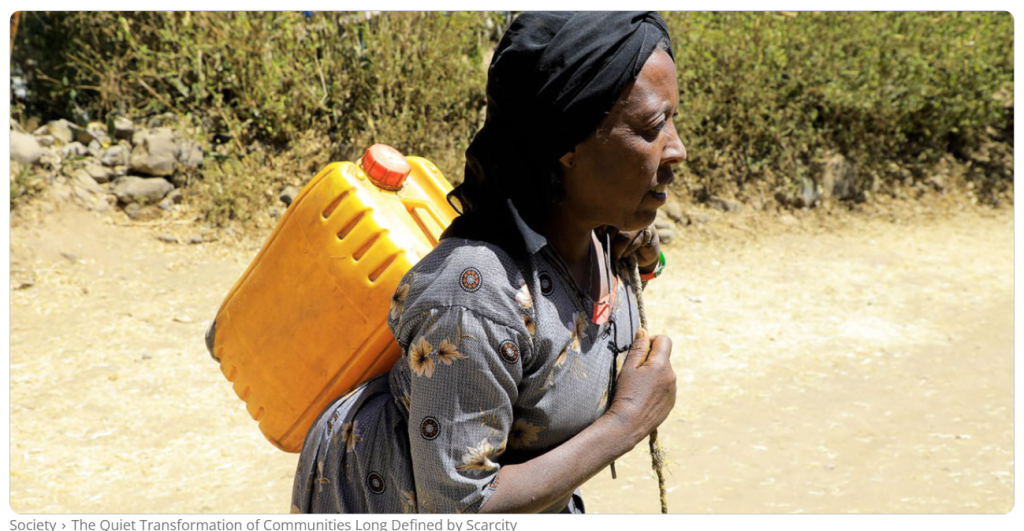
The Quiet Transformation of Communities Long Defined by Scarcity
ByAbraham Tekle/The Reporter , June 13, 2026
In Rural Ethiopia, New Water Systems, Better Healthcare, and Improved Sanitation Are Changing Daily Life
In two corners of Ethiopia where drought and limited public services have long shaped daily life, small but significant changes are beginning to alter the routines of rural communities.
In South Wollo of the Amhara region and across parts of Guji in Oromia, residents are seeing the effects of development projects led by the Ethiopian Red Cross Society, initiatives aimed at strengthening both livelihoods and the fragile environments that sustain them.
Among those whose lives have been touched by the effort are Genet Tadesse, a farmer in East Guji, and Makda Adem, an eighth-grade student in East Borena.
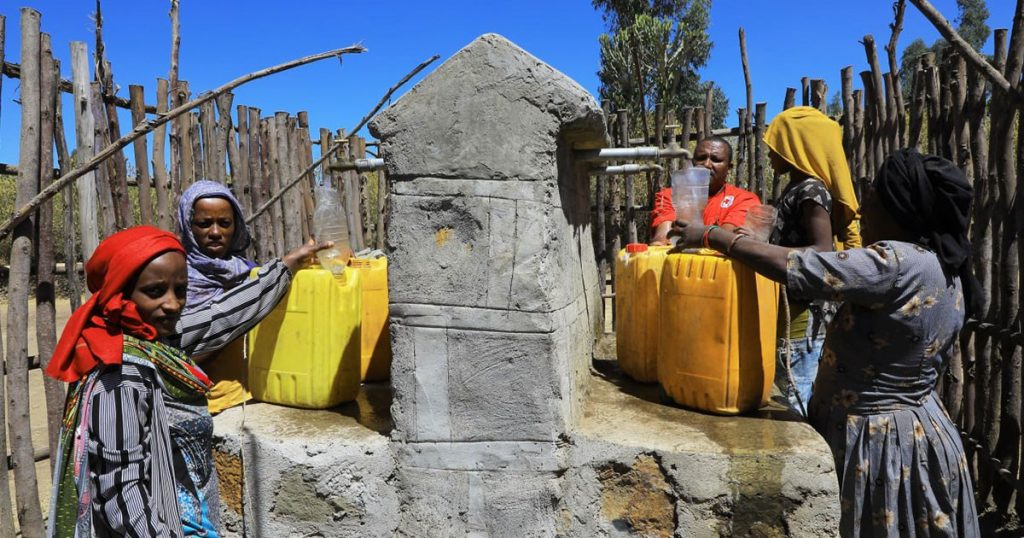
For years, life in Bedesa Welawelu Kebele of Agawayu Woreda revolved around a single unprotected water source. Residents, livestock and household animals all depended on the same muddy stream for drinking, washing and other daily needs, exposing the community to persistent health risks.
Genet remembers those years clearly.
“Everyone used the same source,” she said. “People and animals drank from it. We washed our clothes there. It was our only option.”
When the Ethiopian Red Cross Society’s Ethiopia Crises to Resilience (EC2R) project identified the area for a modern water system, a practical challenge quickly emerged: finding suitable land for the facility.
Genet responded by offering a portion of her own farmland.
Today, the plot has been transformed into a functioning water point that supplies clean drinking water to villagers who once relied on contaminated sources.
Although surrendering productive land came at a personal cost, Genet says the benefits to the community have made the sacrifice worthwhile.
“Water is life,” she said. “Since the water point was built, we have been able to collect clean water peacefully and safely. Of course, I feel the loss of my land, but I am happy when I see my neighbors benefiting and preparing meals without worrying about the quality of the water.”
Hundreds of kilometers to the south, in Medawelabu Woreda of East Borena Zone, the organization’s intervention is tackling a different challenge: menstrual hygiene and girls’ education.
At Wolthai Bura Primary School, Makda Adem and her classmates have spent much of their school years coping with inadequate sanitation facilities. Female students often lacked a private, properly equipped space where they could manage menstruation with dignity.
The absence of facilities for washing, changing sanitary products or cleaning and drying clothes created difficulties that extended beyond physical discomfort.
“We don’t have proper bedding, mats or sanitary supplies,” Makda said. “Many girls struggle during their periods.”
Such conditions often contribute to absenteeism and, in some cases, school dropouts among adolescent girls.
To address the problem, the EC2R project is constructing a dedicated Menstrual Hygiene Management (MHM) room on the school compound, equipped with facilities designed to provide privacy and essential support for female students.
The building may not be completed in time for Makda and many of her classmates to use it themselves. Yet she speaks of the project with appreciation rather than disappointment.
“We are very happy that this facility is being built,” she said. “Even if we graduate before it is finished, the girls who come after us will benefit from it.”
In South Wollo, access to basic healthcare has become more reliable for thousands of residents.
At Tulu Awolya Health Center in Legambo Woreda, chronic shortages of essential medicines once undermined the facility’s ability to treat patients. For many families in the surrounding communities, the absence of basic pharmaceuticals could turn treatable illnesses into serious health emergencies.
Today, the center’s storerooms present a markedly different picture.
Standing among shelves stocked with medicines and medical supplies, Anwar Kedir, the head of the health center, credits the change to support provided through the Ethiopian Red Cross Society.
“The Red Cross has done a lot for this health center,” he said. “Many of the medicines currently available have been supplied through its support. These include essential medicines for children, mothers and the wider community.”
The improved availability of pharmaceuticals has strengthened public confidence in the facility, Anwar said, allowing residents to access treatment closer to home.
The support forms part of the Ethiopia Crises to Resilience (EC2R) program, launched since August 2023 by the Ethiopian Red Cross Society in partnership with the United Kingdom’s Foreign, Commonwealth & Development Office.
Operating across 20 woredas in the Amhara, Oromia, Tigray and Benishangul-Gumuz regions, the initiative aims to improve access to healthcare, clean water and sanitation services in some of the country’s most vulnerable communities.
Funded through UKAID, the program is being implemented in collaboration with UNICEF, the World Food Programme, Reach International and the British Red Cross.
Through the partnership, more than two billion birr has been invested in healthcare services, water and sanitation infrastructure, protection programs and gender-inclusive interventions targeting remote and underserved populations.
For Mekdes Mengisteab, the EC2R project coordinator, the initiative is designed not only to meet immediate needs but also to strengthen the systems that communities depend on. Particular attention is given to groups that often face the greatest barriers to essential services, including women, children, older people, and persons with disabilities, she said.
“A functional health center can mean the difference between life and death,” Mekdes said.
In many of the areas targeted by the program, she noted, health facilities were operating with severe shortages of medicines and equipment, while some lacked reliable electricity and clean water.
The intervention seeks to address those weaknesses at their source, reinforcing local institutions while reducing the daily burdens faced by households.
Before many of the improvements were introduced, access to water itself was a constant struggle. Women and girls often spent hours each day walking to unprotected water sources, exposing their families to waterborne diseases and sacrificing time that could otherwise be spent in school, at work or caring for their households.
For Mekdes, the project’s long-term success depends not only on building infrastructure but also on ensuring that communities can sustain it themselves.
To that end, the program restored 49 hand-pump water systems and trained members of local Water, Sanitation and Hygiene (WASH) committees to carry out routine maintenance. Communities were also supplied with spare parts, enabling them to address minor breakdowns without waiting for external assistance.
The initiative further mobilized residents to extend 52 water distribution pipelines, a collaborative effort that, according to project officials, reduced anticipated construction costs by nearly 20 million birr.
“To ensure resilience, 20 water systems were converted to solar power,” Mekdes said. “This has enabled mothers, children and persons with disabilities to access water consistently near their homes.”
Alongside investments in physical infrastructure, the program launched extensive community outreach campaigns aimed at improving sanitation practices and encouraging greater cooperation within households on issues traditionally borne by women and girls.
According to project data, approximately 1.2 million people were reached through awareness campaigns promoting hygiene, sanitation and handwashing practices.
The impact extends beyond households and health centers. In schools such as Wolthai Bura Primary School, project coordinators believe the improvements will help reduce disease transmission, improve sanitation standards and create a more supportive environment for female students.
“The interventions stabilize school attendance, transitioning education from a restricted privilege to an accessible standard for local students,” Mekdes said.
As the EC2R project expands its reach, additional support has arrived from international partners seeking to strengthen the Ethiopian Red Cross Society’s operational capacity. The United Kingdom government handed over a fleet of vehicles and specialized equipment to the organization, including 22 trucks, a drilling rig, a crane, three water tankers and a desludging vehicle.
The assets, financed through a GBP 5.4 million investment, are intended to support emergency response operations across Ethiopia, particularly in remote and crisis-affected areas where humanitarian access remains difficult.
According to the Ethiopian Red Cross Society, the equipment will enhance its ability to deliver emergency water supplies, humanitarian assistance and disaster-response services during periods of conflict, displacement and climate-related shocks.
Speaking at the handover ceremony, Darren Welch, the United Kingdom’s ambassador to Ethiopia and permanent representative to the African Union, said the donation reflected years of cooperation between the two countries in disaster preparedness and humanitarian response.
“The UK and Ethiopia have been working in partnership for years to strengthen the country’s emergency preparedness, humanitarian support and response capacity,” Welch said. “As climate change continues to impact the region, this equipment will support ERCS in delivering humanitarian assistance, water supply, vital medical services and disaster relief, increasing Ethiopia’s resilience in responding to disasters.”
Abera Tola, president of the Ethiopian Red Cross Society, described the handover as both a practical investment and a symbol of enduring partnership.
“Today’s handover represents more than the transfer of vehicles and equipment,” he said. “It reflects the strong partnership, trust and solidarity between the Ethiopian Red Cross Society and the UK government.”
The newly acquired trucks and WASH equipment, Abera added, are expected to significantly improve the organization’s ability to deliver assistance quickly to communities affected by displacement, drought and other emergencies.
Also attending the ceremony was Mekdes Daba, Ethiopia’s Minister of Health, who highlighted the growing cooperation between the ministry and the Ethiopian Red Cross Society in responding to both natural and human-made disasters.
She cited recent joint efforts, including emergency responses to landslides and campaigns aimed at controlling polio outbreaks, as examples of how coordinated action can strengthen public resilience.
While acknowledging the importance of humanitarian assistance, the minister emphasized the government’s broader objective of moving beyond emergency response toward long-term preparedness and institutional resilience.
That transition, she said, will require sustained investment in healthcare financing, workforce development and digital systems, particularly as thousands of health facilities become integrated into the country’s expanding national health infrastructure.
“Humanitarian challenges require all partners to work from the same page,” Mekdes said. “We have built that trust together, and the government remains committed to strengthening partnerships.”
For communities like those in South Wollo, East Guji and East Borena, the results of those partnerships are already visible — in a water tap where a muddy stream once served an entire village, in medicine stocked on clinic shelves, and in a school facility that promises future generations of girls a safer and more dignified learning environment.